
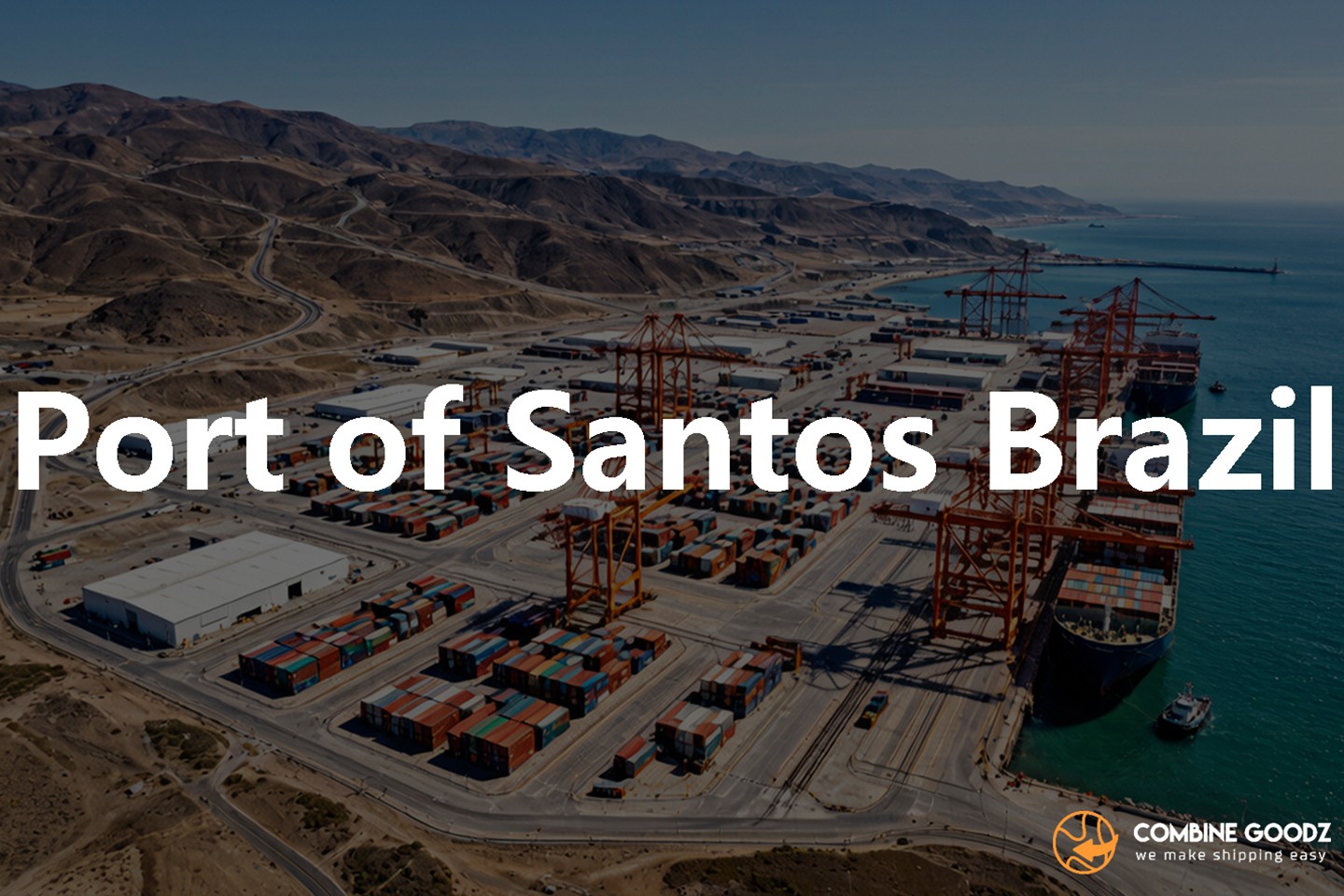
The Port of Santos sits in the city of Santos, in São Paulo state, on Brazil's Atlantic coast about 70 km from São Paulo — the country's industrial and financial heartland. It is the largest and busiest port in South America and the primary gateway for Brazil's containerized foreign trade. If your supply chain touches Brazil, it almost certainly touches Santos.
Santos consistently ranks as the #1 container port in Latin America. Volumes fluctuate year to year, but the scale is unmistakable:
Metric | Approximate volume | Note |
Container throughput | ~4.8 million TEU / year | Recent years; verify current annual figure |
Total cargo handled | 130+ million tonnes / year | Dry + liquid bulk and containers |
Regional rank | #1 in Latin America | By container volume |
Catchment | São Paulo + hinterland | Serves most of Brazil's industry |
Main Exports & Imports
The port moves a classic commodity-export / manufactured-import mix:
· Exports: coffee (Santos is the historic coffee port), sugar, soybeans & soybean meal, orange juice concentrate, meats (poultry and beef), machinery, and chemicals.
· Imports: electronics, auto parts, industrial machinery, chemicals, textiles, consumer goods, and fertilizers (a key raw material for Brazilian agriculture).
· Reefer (refrigerated) cargo is significant, especially for proteins and juices.
Shipping Routes & Carriers
Santos is wired into every major trade lane:
· Asia (China, Korea, Japan): served via the Suez Canal or, as a fallback, the Cape of Good Hope. This is the port's largest deep-sea lane.
· Europe: direct weekly services from Rotterdam, Hamburg, Antwerp, and Valencia.
· North America: U.S. East/Gulf Coast services and U.S. West Coast via the Panama Canal.
· Cabotage & feeders: regular links to Argentine and Uruguayan ports (Buenos Aires, Montevideo).
Major carriers calling Santos include Maersk, MSC, CMA CGM, Hapag-Lloyd, ONE, COSCO, and HMM, operated through several international container terminals (e.g., Santos Brasil, DP World, and others).
Customs Clearance & Documentation (Brazil)
Brazil runs foreign trade through SISCOMEX (Sistema Integrado de Comércio Exterior), an electronic system where all import and export declarations are filed. Practical points for exporters:
· Registration: the exporting company must be properly registered and hold the appropriate RADAR qualification; the export itself is filed as an RE (Registro de Exportação) in SISCOMEX.
· Core documents: Commercial Invoice, Packing List, Bill of Lading, and the Export Declaration (RE).
· Certificate of Origin: needed to claim preferential tariffs under agreements such as Mercosur and the EU–Mercosur framework where applicable.
· Phytosanitary / Veterinary certificates: mandatory for agricultural and animal products (coffee, sugar, soy, meat) and a common source of delay if not pre-arranged.
· Drawback regime: Brazil's Drawback program can suspend or eliminate taxes on imported inputs used to manufacture exported goods — worth exploring for repeat exporters.
· A licensed Despachante Aduaneiro (customs broker) is standard practice and strongly advised.
General flow: file the RE in SISCOMEX → submit documents and undergo customs review → phytosanitary/veterinary inspection if applicable → load and export. Rules change, so confirm current requirements with RECEITA/ANVISA/MAPA and your broker.
Shipper Tips
· Book early around the Brazilian soybean peak (roughly February–June); equipment tightens and rates rise.
· Expect possible Santos congestion at peaks — keep Paranaguá and São Francisco do Sul in mind as alternate gateways.
· Pre-arrange phytosanitary certificates for agri exports; this is the most common avoidable delay.
· Activate and verify your RADAR status before filing the RE.
· Factor inland trucking from the São Paulo metro area into any port-to-door cost — it dominates the bill for many shipments.
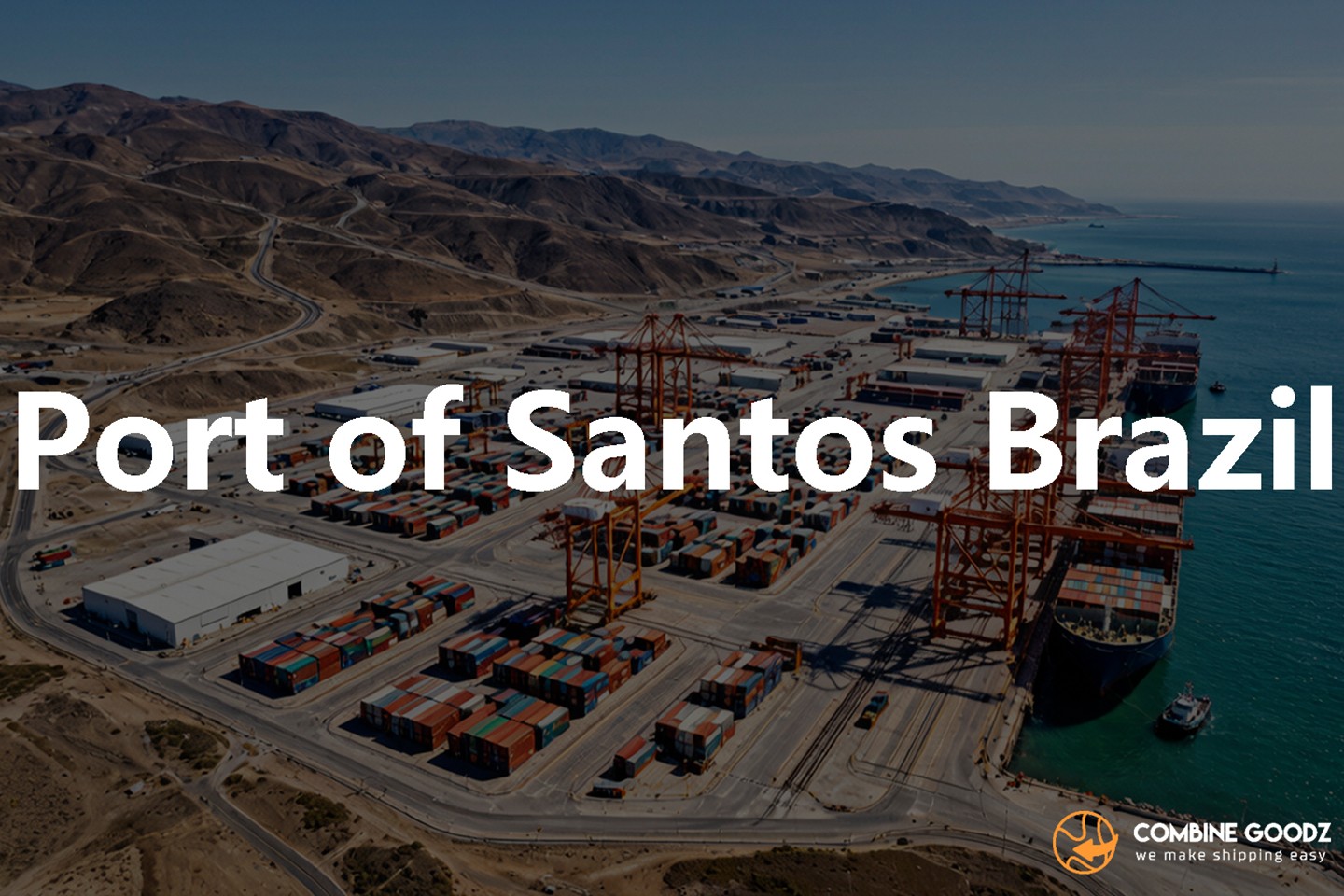
The Port of Santos sits in the city of Santos, in São Paulo state, on Brazil's Atlantic coast about 70 km from São Paulo — the country's industrial and financial heartland. It is the largest and busiest port in South America and the primary gateway for Brazil's containerized foreign trade. If your supply chain touches Brazil, it almost certainly touches Santos.
Santos consistently ranks as the #1 container port in Latin America. Volumes fluctuate year to year, but the scale is unmistakable:
Metric | Approximate volume | Note |
Container throughput | ~4.8 million TEU / year | Recent years; verify current annual figure |
Total cargo handled | 130+ million tonnes / year | Dry + liquid bulk and containers |
Regional rank | #1 in Latin America | By container volume |
Catchment | São Paulo + hinterland | Serves most of Brazil's industry |
Main Exports & Imports
The port moves a classic commodity-export / manufactured-import mix:
· Exports: coffee (Santos is the historic coffee port), sugar, soybeans & soybean meal, orange juice concentrate, meats (poultry and beef), machinery, and chemicals.
· Imports: electronics, auto parts, industrial machinery, chemicals, textiles, consumer goods, and fertilizers (a key raw material for Brazilian agriculture).
· Reefer (refrigerated) cargo is significant, especially for proteins and juices.
Shipping Routes & Carriers
Santos is wired into every major trade lane:
· Asia (China, Korea, Japan): served via the Suez Canal or, as a fallback, the Cape of Good Hope. This is the port's largest deep-sea lane.
· Europe: direct weekly services from Rotterdam, Hamburg, Antwerp, and Valencia.
· North America: U.S. East/Gulf Coast services and U.S. West Coast via the Panama Canal.
· Cabotage & feeders: regular links to Argentine and Uruguayan ports (Buenos Aires, Montevideo).
Major carriers calling Santos include Maersk, MSC, CMA CGM, Hapag-Lloyd, ONE, COSCO, and HMM, operated through several international container terminals (e.g., Santos Brasil, DP World, and others).
Customs Clearance & Documentation (Brazil)
Brazil runs foreign trade through SISCOMEX (Sistema Integrado de Comércio Exterior), an electronic system where all import and export declarations are filed. Practical points for exporters:
· Registration: the exporting company must be properly registered and hold the appropriate RADAR qualification; the export itself is filed as an RE (Registro de Exportação) in SISCOMEX.
· Core documents: Commercial Invoice, Packing List, Bill of Lading, and the Export Declaration (RE).
· Certificate of Origin: needed to claim preferential tariffs under agreements such as Mercosur and the EU–Mercosur framework where applicable.
· Phytosanitary / Veterinary certificates: mandatory for agricultural and animal products (coffee, sugar, soy, meat) and a common source of delay if not pre-arranged.
· Drawback regime: Brazil's Drawback program can suspend or eliminate taxes on imported inputs used to manufacture exported goods — worth exploring for repeat exporters.
· A licensed Despachante Aduaneiro (customs broker) is standard practice and strongly advised.
General flow: file the RE in SISCOMEX → submit documents and undergo customs review → phytosanitary/veterinary inspection if applicable → load and export. Rules change, so confirm current requirements with RECEITA/ANVISA/MAPA and your broker.
Shipper Tips
· Book early around the Brazilian soybean peak (roughly February–June); equipment tightens and rates rise.
· Expect possible Santos congestion at peaks — keep Paranaguá and São Francisco do Sul in mind as alternate gateways.
· Pre-arrange phytosanitary certificates for agri exports; this is the most common avoidable delay.
· Activate and verify your RADAR status before filing the RE.
· Factor inland trucking from the São Paulo metro area into any port-to-door cost — it dominates the bill for many shipments.
Popular Articles

Categories
Share


The latest blogs and insights on what is happening in international transport and logistics.

The best freight forwarder in China who helps to optimize your global transportation with the best possible logistics solution.
