
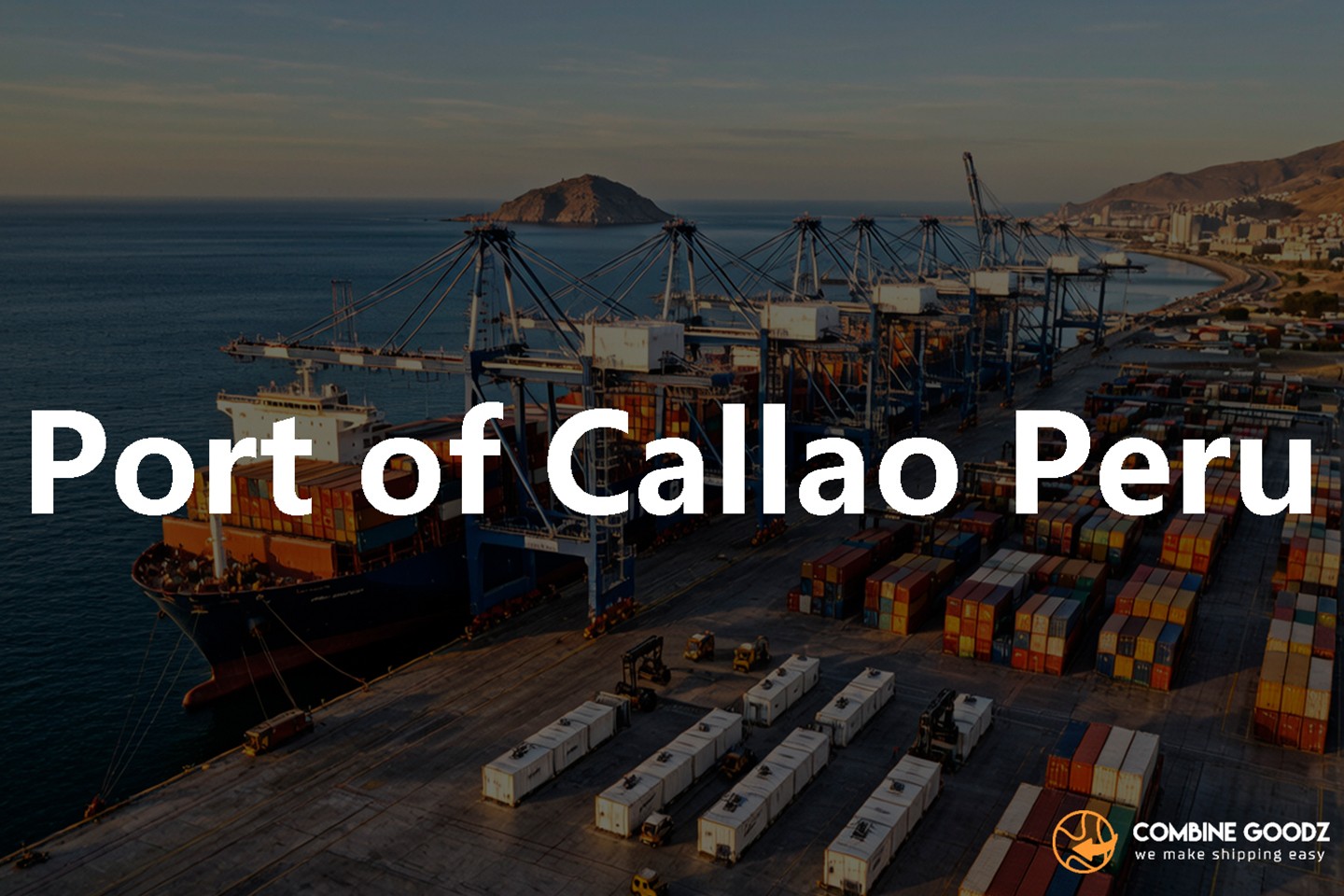
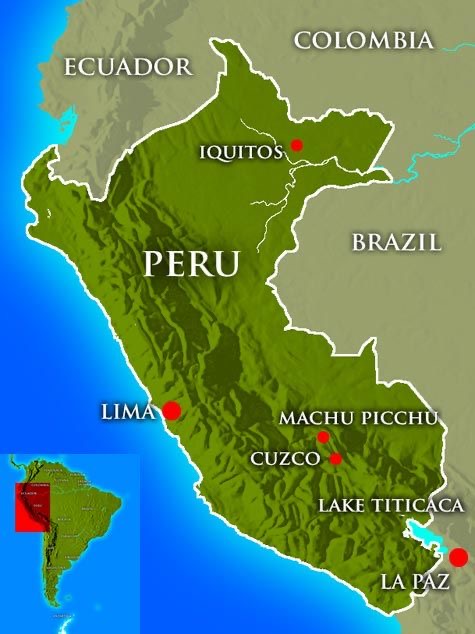
The Port of Callao (UN/LOCODE PECLL) sits in the Constitutional Province of Callao, roughly 12 kilometres west of central Lima, on Peru's Pacific coast. It is the country's principal maritime gateway and one of the busiest container ports on the west coast of South America, sheltered by San Lorenzo Island and served by a natural deep-water approach that reaches around 16 metres of draft at the newest berths.
Callao matters because Peru is a coastal trading economy with a narrow logistics spine: the overwhelming majority of the nation's foreign trade by value moves by sea, and Callao alone accounts for the large majority of Peru's containerised cargo. The port complex is organised around three public-use facilities: the Muelle Sur (South Pier / Bicentennial Pier) container terminal operated under concession by DP World Callao, the Muelle Norte (North Multipurpose Terminal) operated by APM Terminals Callao, and a dedicated mineral concentrate shipping terminal. Regulatory oversight sits with the Autoridad Portuaria Nacional (APN), while concession compliance is supervised by Ositrán.
Callao's position also gives it strategic weight beyond Peru. It functions as a transhipment and relay point for west-coast South America (WCSA) services, and it is the anchor of a corridor that now includes the new deep-water port of Chancay, roughly 78 kilometres to the north, which opened in November 2024 and is gradually reshaping Asia–Pacific routings in the region.
Throughput & Scale
Callao is Peru's dominant gateway. In 2024 the two main container terminals together handled approximately 3.0 million TEU: DP World Callao reported a record of approximately 1.96 million TEU (about a 19% year-on-year increase, following the June 2024 expansion of the Bicentennial Pier to 1,050 metres), while APM Terminals Callao handled roughly 1.1 million TEU. For national context, Peru's port system moved approximately 3.48 million TEU and about 62.9 million tonnes of cargo in 2024, according to figures published by the national port authority.
Total tonnage specifically for the Callao complex is harder to pin down because published series differ in scope (concessioned terminals only, versus the whole complex including mineral and liquid berths). Directionally, Callao handles somewhere in the region of 40–45 million tonnes per year, with the FAO citing an indicative figure of around 44 million tonnes annually. Treat all figures below as approximate and verify against APN and Ositrán statistics before using them commercially.
Metric | Approx volume | Note |
Container throughput — DP World Callao (Muelle Sur) | ~1.96 million TEU | 2024; record, ~+19% YoY |
Container throughput — APM Terminals Callao (Muelle Norte) | ~1.1 million TEU | 2024 |
Container throughput — Callao complex total | ~3.0 million TEU | 2024; approximately 85%+ of Peru's boxes |
Peru national container throughput | ~3.48 million TEU | 2024; ~+10.6% vs 2023 |
Peru national cargo tonnage | ~62.9 million tonnes | 2024; ~+14% YoY |
Callao complex cargo tonnage | ~40–45 million tonnes | Indicative; scope varies by source |
Muelle Sur quay length / design capacity | 1,050 m / ~2.7–3.0 million TEU | Post-2024 expansion; 3 ULCVs simultaneously |
Maximum draft | ~16 m | Accommodates neo-Panamax and larger vessels |
Largest vessel call | ~17,200 TEU (APL Fullerton) | September 2024; largest ever at a Peruvian port |
Vessel calls — DP World Callao | ~900 ships | 2024 |
Performance has improved alongside volume: DP World Callao was ranked among the top three most efficient terminals in Latin America in the World Bank's Container Port Performance Index for 2024, and the operator reports substantial gains in TEU-per-hour productivity since taking over the concession in 2010.
Main Exports & Imports
Callao is unusual in that it combines a very large reefer export flow with heavy mineral and bulk traffic and virtually all of Peru's containerised consumer imports.
Exports — fresh produce (reefer): blueberries, table grapes, avocados, mangoes, citrus, asparagus and pomegranates. Callao channels roughly 40% of Peru's agricultural exports by value, including an estimated 80–85% of national blueberry shipments.
* Exports — minerals and metals: copper and zinc concentrates, lead, silver, refined metals and mineral by-products (though a significant share of southern copper also moves via Matarani).
* Exports — fishery products: fishmeal, fish oil, frozen and canned fish, and squid — Peru is among the world's largest fishmeal suppliers.
* Exports — manufactured and agro-processed goods: textiles and apparel (Pima cotton, alpaca knitwear), coffee, cacao, quinoa, and prepared foods.
* Imports — consumer and capital goods: electronics, household appliances, vehicles and auto parts, machinery, and construction equipment.
* Imports — industrial inputs: steel and steel products, chemicals, plastics and resins, paper, and pharmaceuticals.
* Imports — agricultural bulk: maize, soybean meal, wheat and fertilisers, largely for Peru's poultry and agribusiness sectors.
Shipping Routes & Carriers
Callao is a mainline call rather than a pure feeder port. Its core lanes run west across the Pacific to Asia, north to North America (both directly to the US West Coast and via the Panama Canal to the US East Coast and Gulf), and to Northern Europe and the Mediterranean via Panama. A regional WCSA network links Callao with Chile, Ecuador, Colombia and Central America, and short-sea/feeder flows connect it to Paita, Chancay, Salaverry and Matarani.
* Asia – WCSA (trans-Pacific): the highest-growth lane, carrying reefer exports east-to-west and manufactured imports west-to-east. Served by COSCO, Evergreen, ONE, HMM, Wan Hai, Maersk, MSC, CMA CGM and Hapag-Lloyd on rotations that typically also call Chancay, San Antonio and Guayaquil.
* North America: US West Coast services (Los Angeles/Long Beach, Oakland) plus Panama Canal strings to the US East Coast (Philadelphia, Savannah, New York) and Gulf ports — critical for perishable exports where transit time is decisive.
* Europe: EUROSAL/Andean-type consortium services via the Panama Canal to Rotterdam, Antwerp, London Gateway, Algeciras and Mediterranean hubs, operated jointly by Hapag-Lloyd, CMA CGM, Maersk and partners.
* Intra-South America and cabotage: regional services to Valparaíso, San Antonio, Buenaventura, Guayaquil and Panama transhipment hubs (Balboa, Manzanillo) for onward relay; domestic Peruvian cabotage exists but remains modest in volume.
* Bulk and specialist trades: dedicated mineral concentrate and grain berths, plus RoRo and project-cargo handling at the multipurpose North Terminal.
For time-sensitive perishables, note that direct Asia strings from Callao and Chancay have been marketed at roughly 23 days to China, versus longer transhipped alternatives — always confirm the specific string and cut-off with your carrier, as rotations change seasonally.
Customs Clearance & Documentation
Peru's customs authority is SUNAT (Superintendencia Nacional de Aduanas y de Administración Tributaria). Filings are made electronically through SUNAT's systems and the VUCE (Ventanilla Única de Comercio Exterior), the single-window platform that also routes permits from sectoral agencies such as SENASA (plant and animal health) and DIGESA/DIGEMID (food, health and pharmaceutical products). The customs declaration is the DAM (Declaración Aduanera de Mercancías).
* Company registration: any Peruvian importer or exporter must hold a RUC (Registro Único de Contribuyentes) number issued by SUNAT, in active status, with a SOL clave for electronic filing. There is no separate import licence for most goods.
* Customs broker: a licensed agente de aduana is required for shipments above the low-value threshold (historically US$2,000 FOB); below that, simplified clearance applies. Exporta Fácil offers a streamlined channel for small parcel exports via Serpost.
* Core documents: commercial invoice, packing list, bill of lading (or air waybill), and the DAM. A certificate of origin is needed to claim preferential duty under Peru's free trade agreements.
* Conditional documents: phytosanitary certificate (SENASA) for plant products, sanitary/veterinary certificate for animal products and foodstuffs, fumigation certificate for wood packaging (ISPM-15 compliance), insurance certificate, and sector-specific permits routed through VUCE.
* Clearance process: cargo manifest transmission → DAM lodgement → duty and tax payment → risk-based channel assignment (green = release, orange = document review, red = physical inspection) → release. Despacho anticipado (advance clearance, filed before vessel arrival) is the standard route at Callao and materially shortens dwell time.
* Duties and taxes on imports: ad valorem tariffs are commonly 0%, 6% or 11% depending on tariff heading, with a large share of lines at 0%. IGV (VAT) of 18% applies (16% VAT plus 2% IPM municipal promotion tax), plus ISC excise on selected goods and an advance IGV perception on many imports.
* Trade preferences: Peru has free trade agreements with China, the United States, the European Union, Japan, South Korea, Canada, Mercosur, the Pacific Alliance and CPTPP members, among others. Correct origin documentation is the single biggest lever on landed cost.
* Regimes and incentives: the drawback scheme (restitución simplificada de derechos arancelarios) refunds a percentage of FOB export value on qualifying goods — confirm the current rate, which has been adjusted several times. Temporary admission for inward processing, bonded warehousing, and free zones such as ZOFRATACNA and the CETICOS regimes are also available. AEO status (Operador Económico Autorizado) delivers faster channels and fewer inspections.
* This is general guidance, not legal or customs advice. Rules, rates and thresholds change — verify with SUNAT, VUCE and your licensed broker before committing to a shipment.
Shipper Tips
* File despacho anticipado wherever possible. Pre-arrival lodgement is the difference between same-day release and multi-day yard storage, and demurrage at Callao escalates quickly during peak agro-export season.
* Book reefer capacity early for the blueberry and grape windows (broadly September to January). Plug availability and vessel space tighten sharply, and rolled reefer bookings are costly in both freight and product quality.
* Check whether Chancay suits your routing. The new deep-water port north of Lima can offer faster direct Asia transits for some cargo, but inland trucking, empty-container availability and depot networks are still maturing — model total door-to-door cost, not just ocean transit.
* Get origin documentation right the first time. With FTAs covering most of Peru's major partners, a missing or defective certificate of origin can add double-digit percentage points to landed cost, and retroactive correction is slow.
* Build in a buffer for red-channel inspections on food, agricultural and regulated goods. SENASA and DIGESA clearances run in parallel through VUCE, but a single missing permit will hold the whole consignment.
* Confirm your broker's AEO status and Callao terminal appointment procedures. Gate slots, weighing (VGM) deadlines and documentation cut-offs differ between Muelle Sur and Muelle Norte.
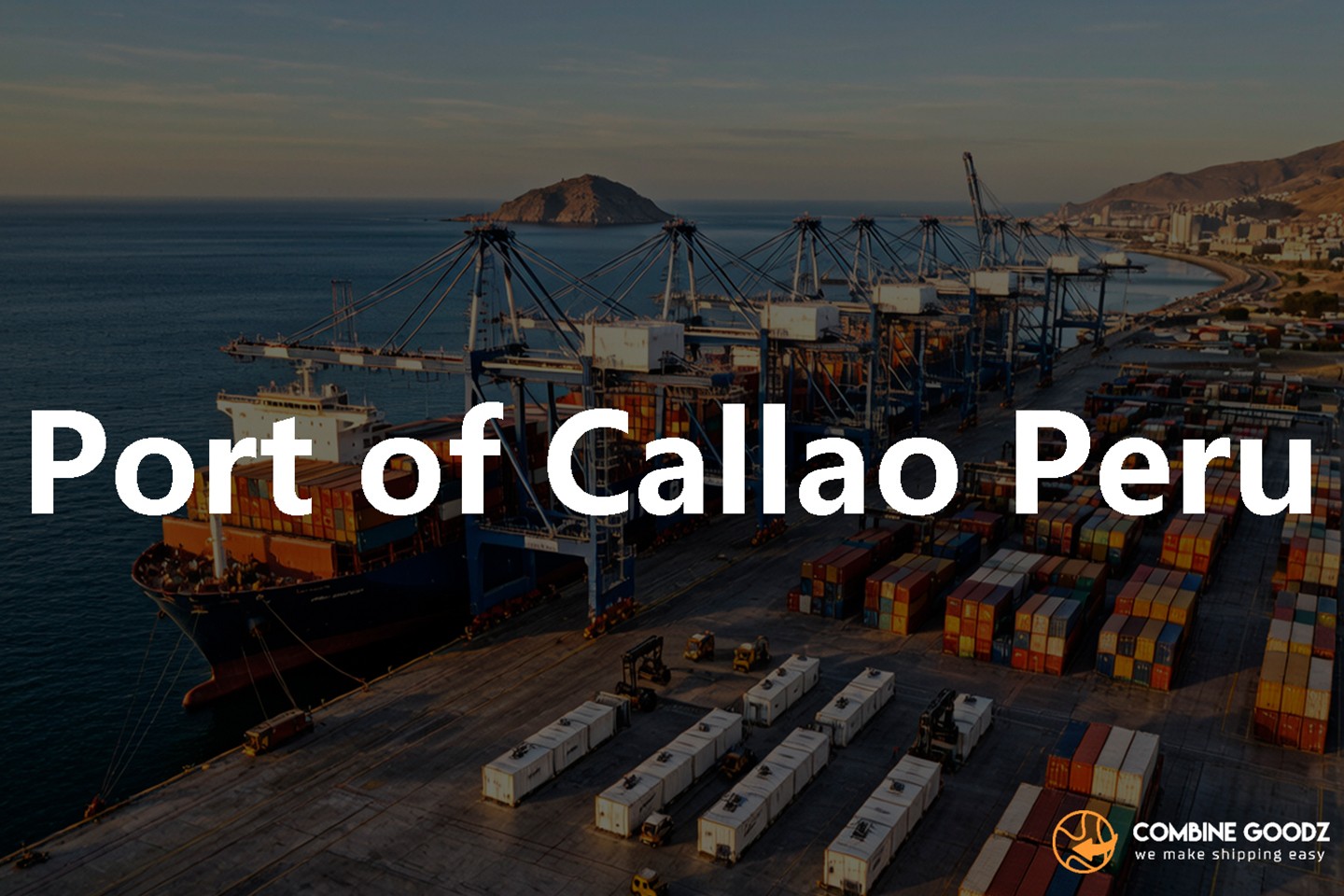
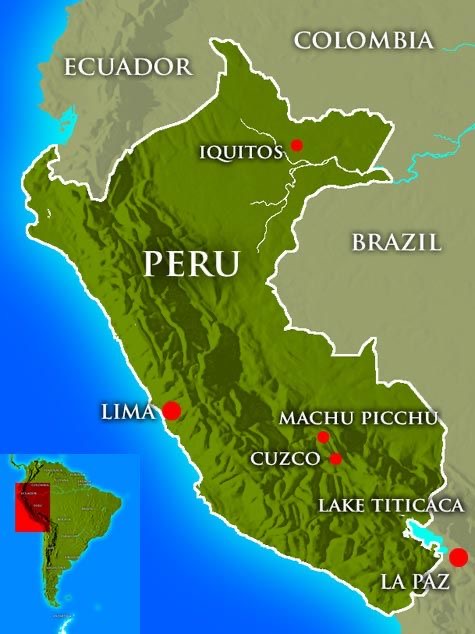
The Port of Callao (UN/LOCODE PECLL) sits in the Constitutional Province of Callao, roughly 12 kilometres west of central Lima, on Peru's Pacific coast. It is the country's principal maritime gateway and one of the busiest container ports on the west coast of South America, sheltered by San Lorenzo Island and served by a natural deep-water approach that reaches around 16 metres of draft at the newest berths.
Callao matters because Peru is a coastal trading economy with a narrow logistics spine: the overwhelming majority of the nation's foreign trade by value moves by sea, and Callao alone accounts for the large majority of Peru's containerised cargo. The port complex is organised around three public-use facilities: the Muelle Sur (South Pier / Bicentennial Pier) container terminal operated under concession by DP World Callao, the Muelle Norte (North Multipurpose Terminal) operated by APM Terminals Callao, and a dedicated mineral concentrate shipping terminal. Regulatory oversight sits with the Autoridad Portuaria Nacional (APN), while concession compliance is supervised by Ositrán.
Callao's position also gives it strategic weight beyond Peru. It functions as a transhipment and relay point for west-coast South America (WCSA) services, and it is the anchor of a corridor that now includes the new deep-water port of Chancay, roughly 78 kilometres to the north, which opened in November 2024 and is gradually reshaping Asia–Pacific routings in the region.
Throughput & Scale
Callao is Peru's dominant gateway. In 2024 the two main container terminals together handled approximately 3.0 million TEU: DP World Callao reported a record of approximately 1.96 million TEU (about a 19% year-on-year increase, following the June 2024 expansion of the Bicentennial Pier to 1,050 metres), while APM Terminals Callao handled roughly 1.1 million TEU. For national context, Peru's port system moved approximately 3.48 million TEU and about 62.9 million tonnes of cargo in 2024, according to figures published by the national port authority.
Total tonnage specifically for the Callao complex is harder to pin down because published series differ in scope (concessioned terminals only, versus the whole complex including mineral and liquid berths). Directionally, Callao handles somewhere in the region of 40–45 million tonnes per year, with the FAO citing an indicative figure of around 44 million tonnes annually. Treat all figures below as approximate and verify against APN and Ositrán statistics before using them commercially.
Metric | Approx volume | Note |
Container throughput — DP World Callao (Muelle Sur) | ~1.96 million TEU | 2024; record, ~+19% YoY |
Container throughput — APM Terminals Callao (Muelle Norte) | ~1.1 million TEU | 2024 |
Container throughput — Callao complex total | ~3.0 million TEU | 2024; approximately 85%+ of Peru's boxes |
Peru national container throughput | ~3.48 million TEU | 2024; ~+10.6% vs 2023 |
Peru national cargo tonnage | ~62.9 million tonnes | 2024; ~+14% YoY |
Callao complex cargo tonnage | ~40–45 million tonnes | Indicative; scope varies by source |
Muelle Sur quay length / design capacity | 1,050 m / ~2.7–3.0 million TEU | Post-2024 expansion; 3 ULCVs simultaneously |
Maximum draft | ~16 m | Accommodates neo-Panamax and larger vessels |
Largest vessel call | ~17,200 TEU (APL Fullerton) | September 2024; largest ever at a Peruvian port |
Vessel calls — DP World Callao | ~900 ships | 2024 |
Performance has improved alongside volume: DP World Callao was ranked among the top three most efficient terminals in Latin America in the World Bank's Container Port Performance Index for 2024, and the operator reports substantial gains in TEU-per-hour productivity since taking over the concession in 2010.
Main Exports & Imports
Callao is unusual in that it combines a very large reefer export flow with heavy mineral and bulk traffic and virtually all of Peru's containerised consumer imports.
Exports — fresh produce (reefer): blueberries, table grapes, avocados, mangoes, citrus, asparagus and pomegranates. Callao channels roughly 40% of Peru's agricultural exports by value, including an estimated 80–85% of national blueberry shipments.
* Exports — minerals and metals: copper and zinc concentrates, lead, silver, refined metals and mineral by-products (though a significant share of southern copper also moves via Matarani).
* Exports — fishery products: fishmeal, fish oil, frozen and canned fish, and squid — Peru is among the world's largest fishmeal suppliers.
* Exports — manufactured and agro-processed goods: textiles and apparel (Pima cotton, alpaca knitwear), coffee, cacao, quinoa, and prepared foods.
* Imports — consumer and capital goods: electronics, household appliances, vehicles and auto parts, machinery, and construction equipment.
* Imports — industrial inputs: steel and steel products, chemicals, plastics and resins, paper, and pharmaceuticals.
* Imports — agricultural bulk: maize, soybean meal, wheat and fertilisers, largely for Peru's poultry and agribusiness sectors.
Shipping Routes & Carriers
Callao is a mainline call rather than a pure feeder port. Its core lanes run west across the Pacific to Asia, north to North America (both directly to the US West Coast and via the Panama Canal to the US East Coast and Gulf), and to Northern Europe and the Mediterranean via Panama. A regional WCSA network links Callao with Chile, Ecuador, Colombia and Central America, and short-sea/feeder flows connect it to Paita, Chancay, Salaverry and Matarani.
* Asia – WCSA (trans-Pacific): the highest-growth lane, carrying reefer exports east-to-west and manufactured imports west-to-east. Served by COSCO, Evergreen, ONE, HMM, Wan Hai, Maersk, MSC, CMA CGM and Hapag-Lloyd on rotations that typically also call Chancay, San Antonio and Guayaquil.
* North America: US West Coast services (Los Angeles/Long Beach, Oakland) plus Panama Canal strings to the US East Coast (Philadelphia, Savannah, New York) and Gulf ports — critical for perishable exports where transit time is decisive.
* Europe: EUROSAL/Andean-type consortium services via the Panama Canal to Rotterdam, Antwerp, London Gateway, Algeciras and Mediterranean hubs, operated jointly by Hapag-Lloyd, CMA CGM, Maersk and partners.
* Intra-South America and cabotage: regional services to Valparaíso, San Antonio, Buenaventura, Guayaquil and Panama transhipment hubs (Balboa, Manzanillo) for onward relay; domestic Peruvian cabotage exists but remains modest in volume.
* Bulk and specialist trades: dedicated mineral concentrate and grain berths, plus RoRo and project-cargo handling at the multipurpose North Terminal.
For time-sensitive perishables, note that direct Asia strings from Callao and Chancay have been marketed at roughly 23 days to China, versus longer transhipped alternatives — always confirm the specific string and cut-off with your carrier, as rotations change seasonally.
Customs Clearance & Documentation
Peru's customs authority is SUNAT (Superintendencia Nacional de Aduanas y de Administración Tributaria). Filings are made electronically through SUNAT's systems and the VUCE (Ventanilla Única de Comercio Exterior), the single-window platform that also routes permits from sectoral agencies such as SENASA (plant and animal health) and DIGESA/DIGEMID (food, health and pharmaceutical products). The customs declaration is the DAM (Declaración Aduanera de Mercancías).
* Company registration: any Peruvian importer or exporter must hold a RUC (Registro Único de Contribuyentes) number issued by SUNAT, in active status, with a SOL clave for electronic filing. There is no separate import licence for most goods.
* Customs broker: a licensed agente de aduana is required for shipments above the low-value threshold (historically US$2,000 FOB); below that, simplified clearance applies. Exporta Fácil offers a streamlined channel for small parcel exports via Serpost.
* Core documents: commercial invoice, packing list, bill of lading (or air waybill), and the DAM. A certificate of origin is needed to claim preferential duty under Peru's free trade agreements.
* Conditional documents: phytosanitary certificate (SENASA) for plant products, sanitary/veterinary certificate for animal products and foodstuffs, fumigation certificate for wood packaging (ISPM-15 compliance), insurance certificate, and sector-specific permits routed through VUCE.
* Clearance process: cargo manifest transmission → DAM lodgement → duty and tax payment → risk-based channel assignment (green = release, orange = document review, red = physical inspection) → release. Despacho anticipado (advance clearance, filed before vessel arrival) is the standard route at Callao and materially shortens dwell time.
* Duties and taxes on imports: ad valorem tariffs are commonly 0%, 6% or 11% depending on tariff heading, with a large share of lines at 0%. IGV (VAT) of 18% applies (16% VAT plus 2% IPM municipal promotion tax), plus ISC excise on selected goods and an advance IGV perception on many imports.
* Trade preferences: Peru has free trade agreements with China, the United States, the European Union, Japan, South Korea, Canada, Mercosur, the Pacific Alliance and CPTPP members, among others. Correct origin documentation is the single biggest lever on landed cost.
* Regimes and incentives: the drawback scheme (restitución simplificada de derechos arancelarios) refunds a percentage of FOB export value on qualifying goods — confirm the current rate, which has been adjusted several times. Temporary admission for inward processing, bonded warehousing, and free zones such as ZOFRATACNA and the CETICOS regimes are also available. AEO status (Operador Económico Autorizado) delivers faster channels and fewer inspections.
* This is general guidance, not legal or customs advice. Rules, rates and thresholds change — verify with SUNAT, VUCE and your licensed broker before committing to a shipment.
Shipper Tips
* File despacho anticipado wherever possible. Pre-arrival lodgement is the difference between same-day release and multi-day yard storage, and demurrage at Callao escalates quickly during peak agro-export season.
* Book reefer capacity early for the blueberry and grape windows (broadly September to January). Plug availability and vessel space tighten sharply, and rolled reefer bookings are costly in both freight and product quality.
* Check whether Chancay suits your routing. The new deep-water port north of Lima can offer faster direct Asia transits for some cargo, but inland trucking, empty-container availability and depot networks are still maturing — model total door-to-door cost, not just ocean transit.
* Get origin documentation right the first time. With FTAs covering most of Peru's major partners, a missing or defective certificate of origin can add double-digit percentage points to landed cost, and retroactive correction is slow.
* Build in a buffer for red-channel inspections on food, agricultural and regulated goods. SENASA and DIGESA clearances run in parallel through VUCE, but a single missing permit will hold the whole consignment.
* Confirm your broker's AEO status and Callao terminal appointment procedures. Gate slots, weighing (VGM) deadlines and documentation cut-offs differ between Muelle Sur and Muelle Norte.
Popular Articles

Categories
Share


Prev:China Warehousing
The latest blogs and insights on what is happening in international transport and logistics.

The best freight forwarder in China who helps to optimize your global transportation with the best possible logistics solution.
