
Ocean freight routes to North America are core international trade shipping lanes connecting Asia, Europe and Latin America with ports in the United States, Canada and Mexico. These routes carry the majority of cross-border bulk goods, containerized cargo, raw materials and finished consumer products. Unlike air freight which focuses on high-value, time-sensitive goods, ocean shipping features large vessel capacity, low unit transportation cost and stable regular liner services.
North America ocean shipping lines are generally split into three major segments: Trans-Pacific Eastbound Lanes (Asia to North America), Intra-North America Coastal & Cross-border Lanes, and Trans-Atlantic Westbound Lanes (Europe to North America). Among them, Trans-Pacific container routes are the busiest and most vital trade corridors for Chinese export and import enterprises.
Classification of North America Ocean Freight Routes & Core Information Table
| Route Category | Main Loading Ports | Key Discharge Ports | Representative Shipping Lines | Main Cargo Types | Shipping Cycle Features |
|---|---|---|---|---|---|
| Trans-Pacific West Coast Route (Asia ↔ US West / Canada West) | Shanghai, Ningbo, Shenzhen, Qingdao, Xiamen, Tianjin | Los Angeles (LA/LGB), Long Beach, Seattle, Tacoma, Vancouver | Maersk, MSC, CMA CGM, COSCO Shipping, OOCL, ONE, Hapag-Lloyd | Electronic products, furniture, textiles, toys, cross-border e-commerce goods | 11–14 days one-way; fastest trans-Pacific lane; frequent weekly sailings; low detention & storage cost advantage |
| Trans-Pacific East Coast Route (Asia ↔ US East) | Shanghai, Ningbo, Shenzhen, Qingdao, Tianjin | New York, Savannah, Norfolk, Charleston, Miami | All major global container liners | Large machinery, auto parts, daily necessities, bulk retail stock | Two service modes:1. All-water route via Panama Canal (24–30 days);2. West Coast rail intermodal transport (18–22 days) |
| Mexico Route (Asia ↔ Mexico) | Main Chinese major container ports | Manzanillo, Lazaro Cardenas, Veracruz | COSCO, Maersk, MSC, CMA CGM | Auto accessories, home appliances, agricultural raw materials, manufacturing supplies | 16–22 days transit; popular for factory transfer & US tariff avoidance logistics |
| Intra-North America Coastal Feeder Routes | LA, Long Beach, Vancouver, New York | Houston, Boston, Montreal, Halifax, Cancun | Small regional feeder carriers & main liner subsidiary feeders | Domestic replenishment cargo, small-batch distribution goods | Short voyage: 2–7 days; acts as inland port extension service |
| Trans-Atlantic Route (Europe ↔ North America) | Hamburg, Rotterdam, Le Havre, Felixstowe | New York, Savannah, Halifax, Montreal | Maersk, MSC, Hapag-Lloyd, CMA CGM | Chemicals, luxury goods, industrial equipment, wine, food imports | 7–12 days one-way; stable year-round industrial trade volume |
The US West Coast and Western Canada ports are the primary entry points for Chinese exporters. Vessels depart from major Chinese container hubs weekly, with fixed liner schedules covering year-round shipments.
Los Angeles and Long Beach form the largest container port complex in North America. A huge intermodal railway and highway system connects these two ports to inland cities such as Chicago, Dallas and Memphis. Vancouver Port serves Western Canada, catering to local retail, construction and resource import demands with less port congestion compared to US West Coast ports.
Advantages of West Coast shipping: shorter transit time, abundant vessel space, mature truck and rail delivery networks. It is the first choice for cross-border e-commerce sellers, apparel factories and light consumer goods manufacturers. Peak seasons fall between June–August and September–November, ahead of US holiday shopping seasons (Halloween, Thanksgiving, Christmas), when freight rates surge and port congestion often occurs.
There are two mainstream logistics plans to reach US East Coast markets from Asia.
1. All-water Panama Canal Service: Vessels sail south to pass through the Panama Canal and directly unload at Savannah, Charleston and New York. No inland transit transfer, suitable for full-container loads with low urgency requirements. The total sailing time exceeds 25 days, and canal tolls add extra logistics costs.
2. Intermodal Rail via West Coast: Cargo arrives at LA/Long Beach first, then is transported by double-stack container trains across the US continent to eastern destinations. Transit time is cut by about one week, ideal for time-sensitive retail inventory replenishment. Additional rail handling fees apply for this combined sea-rail mode.
Mexico acts as an important manufacturing buffer zone for North American supply chains. Asian manufacturers ship raw materials and semi-finished goods to Mexican west coast ports Manzanillo and Lazaro Cardenas for local assembly. Finished products are then transported by land truck to the United States, helping enterprises optimize tariff costs under regional trade agreements.
East Mexico port Veracruz mainly receives bulk industrial cargo bound for central and eastern Mexico, with fewer direct weekly sailings from China than west Mexican ports.
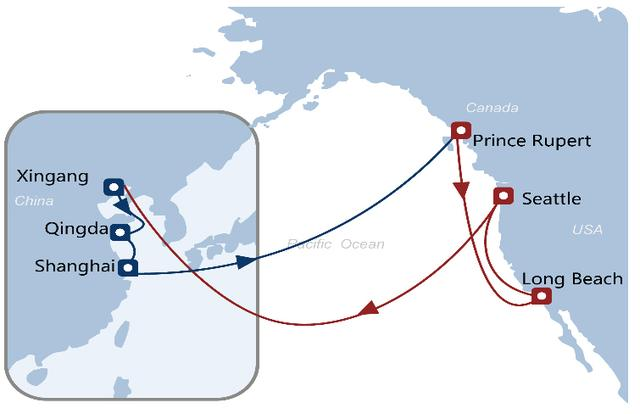
Coastal feeder vessels realize secondary distribution within North America. After large mother ships unload containers at gateway hubs, small feeders carry cargo to secondary coastal and regional ports, completing last-stage marine delivery before inland trucking.
Trans-Atlantic lanes mainly handle trade between European industrial powers and North America. This route relies less on Asian supply chains and maintains steady demand for industrial equipment, chemical raw materials and imported European consumer goods all year long.
Obvious seasonal freight fluctuation: Q3 and Q4 witness sharp rate hikes due to US holiday stock-up; Q1 after Christmas is the off-season with lower ocean freight.
Port congestion risks: LA/Long Beach and Panama Canal often face vessel queuing during peak seasons, leading to extended overall logistics cycles.
Diversified intermodal options: Sea-only, sea-rail and sea-truck combined transport services are widely available to match different delivery lead time budgets.
Strict customs supervision: All imported containers must submit AMS (Automated Manifest System) declarations 48 hours before vessels arrive at US ports; Canada requires equivalent ACI filings. Failure to declare will result in heavy fines and cargo detention.
North America ocean shipping routes form a complete container logistics network covering west coast, east coast and Mexican markets. Trans-Pacific lanes serve as the backbone of Asia-North America manufacturing trade, supported by mature liner schedules, intermodal transport and regional feeder extensions. For import and export companies, reasonable route selection between West Coast direct service, Panama all-water route and Mexican transshipment directly affects transportation cost, delivery time and supply chain stability. As cross-continental commodity trade continues to expand, these ocean lanes will remain irreplaceable for mass cargo transportation between Asia and North America.
Ocean freight routes to North America are core international trade shipping lanes connecting Asia, Europe and Latin America with ports in the United States, Canada and Mexico. These routes carry the majority of cross-border bulk goods, containerized cargo, raw materials and finished consumer products. Unlike air freight which focuses on high-value, time-sensitive goods, ocean shipping features large vessel capacity, low unit transportation cost and stable regular liner services.
North America ocean shipping lines are generally split into three major segments: Trans-Pacific Eastbound Lanes (Asia to North America), Intra-North America Coastal & Cross-border Lanes, and Trans-Atlantic Westbound Lanes (Europe to North America). Among them, Trans-Pacific container routes are the busiest and most vital trade corridors for Chinese export and import enterprises.
Classification of North America Ocean Freight Routes & Core Information Table
| Route Category | Main Loading Ports | Key Discharge Ports | Representative Shipping Lines | Main Cargo Types | Shipping Cycle Features |
|---|---|---|---|---|---|
| Trans-Pacific West Coast Route (Asia ↔ US West / Canada West) | Shanghai, Ningbo, Shenzhen, Qingdao, Xiamen, Tianjin | Los Angeles (LA/LGB), Long Beach, Seattle, Tacoma, Vancouver | Maersk, MSC, CMA CGM, COSCO Shipping, OOCL, ONE, Hapag-Lloyd | Electronic products, furniture, textiles, toys, cross-border e-commerce goods | 11–14 days one-way; fastest trans-Pacific lane; frequent weekly sailings; low detention & storage cost advantage |
| Trans-Pacific East Coast Route (Asia ↔ US East) | Shanghai, Ningbo, Shenzhen, Qingdao, Tianjin | New York, Savannah, Norfolk, Charleston, Miami | All major global container liners | Large machinery, auto parts, daily necessities, bulk retail stock | Two service modes:1. All-water route via Panama Canal (24–30 days);2. West Coast rail intermodal transport (18–22 days) |
| Mexico Route (Asia ↔ Mexico) | Main Chinese major container ports | Manzanillo, Lazaro Cardenas, Veracruz | COSCO, Maersk, MSC, CMA CGM | Auto accessories, home appliances, agricultural raw materials, manufacturing supplies | 16–22 days transit; popular for factory transfer & US tariff avoidance logistics |
| Intra-North America Coastal Feeder Routes | LA, Long Beach, Vancouver, New York | Houston, Boston, Montreal, Halifax, Cancun | Small regional feeder carriers & main liner subsidiary feeders | Domestic replenishment cargo, small-batch distribution goods | Short voyage: 2–7 days; acts as inland port extension service |
| Trans-Atlantic Route (Europe ↔ North America) | Hamburg, Rotterdam, Le Havre, Felixstowe | New York, Savannah, Halifax, Montreal | Maersk, MSC, Hapag-Lloyd, CMA CGM | Chemicals, luxury goods, industrial equipment, wine, food imports | 7–12 days one-way; stable year-round industrial trade volume |
The US West Coast and Western Canada ports are the primary entry points for Chinese exporters. Vessels depart from major Chinese container hubs weekly, with fixed liner schedules covering year-round shipments.
Los Angeles and Long Beach form the largest container port complex in North America. A huge intermodal railway and highway system connects these two ports to inland cities such as Chicago, Dallas and Memphis. Vancouver Port serves Western Canada, catering to local retail, construction and resource import demands with less port congestion compared to US West Coast ports.
Advantages of West Coast shipping: shorter transit time, abundant vessel space, mature truck and rail delivery networks. It is the first choice for cross-border e-commerce sellers, apparel factories and light consumer goods manufacturers. Peak seasons fall between June–August and September–November, ahead of US holiday shopping seasons (Halloween, Thanksgiving, Christmas), when freight rates surge and port congestion often occurs.
There are two mainstream logistics plans to reach US East Coast markets from Asia.
1. All-water Panama Canal Service: Vessels sail south to pass through the Panama Canal and directly unload at Savannah, Charleston and New York. No inland transit transfer, suitable for full-container loads with low urgency requirements. The total sailing time exceeds 25 days, and canal tolls add extra logistics costs.
2. Intermodal Rail via West Coast: Cargo arrives at LA/Long Beach first, then is transported by double-stack container trains across the US continent to eastern destinations. Transit time is cut by about one week, ideal for time-sensitive retail inventory replenishment. Additional rail handling fees apply for this combined sea-rail mode.
Mexico acts as an important manufacturing buffer zone for North American supply chains. Asian manufacturers ship raw materials and semi-finished goods to Mexican west coast ports Manzanillo and Lazaro Cardenas for local assembly. Finished products are then transported by land truck to the United States, helping enterprises optimize tariff costs under regional trade agreements.
East Mexico port Veracruz mainly receives bulk industrial cargo bound for central and eastern Mexico, with fewer direct weekly sailings from China than west Mexican ports.

Coastal feeder vessels realize secondary distribution within North America. After large mother ships unload containers at gateway hubs, small feeders carry cargo to secondary coastal and regional ports, completing last-stage marine delivery before inland trucking.
Trans-Atlantic lanes mainly handle trade between European industrial powers and North America. This route relies less on Asian supply chains and maintains steady demand for industrial equipment, chemical raw materials and imported European consumer goods all year long.
Obvious seasonal freight fluctuation: Q3 and Q4 witness sharp rate hikes due to US holiday stock-up; Q1 after Christmas is the off-season with lower ocean freight.
Port congestion risks: LA/Long Beach and Panama Canal often face vessel queuing during peak seasons, leading to extended overall logistics cycles.
Diversified intermodal options: Sea-only, sea-rail and sea-truck combined transport services are widely available to match different delivery lead time budgets.
Strict customs supervision: All imported containers must submit AMS (Automated Manifest System) declarations 48 hours before vessels arrive at US ports; Canada requires equivalent ACI filings. Failure to declare will result in heavy fines and cargo detention.
North America ocean shipping routes form a complete container logistics network covering west coast, east coast and Mexican markets. Trans-Pacific lanes serve as the backbone of Asia-North America manufacturing trade, supported by mature liner schedules, intermodal transport and regional feeder extensions. For import and export companies, reasonable route selection between West Coast direct service, Panama all-water route and Mexican transshipment directly affects transportation cost, delivery time and supply chain stability. As cross-continental commodity trade continues to expand, these ocean lanes will remain irreplaceable for mass cargo transportation between Asia and North America.
Popular Articles

Categories
Share


The latest blogs and insights on what is happening in international transport and logistics.

The best freight forwarder in China who helps to optimize your global transportation with the best possible logistics solution.
